Designer’s Commentary: Blazing Assault Re-Balanced
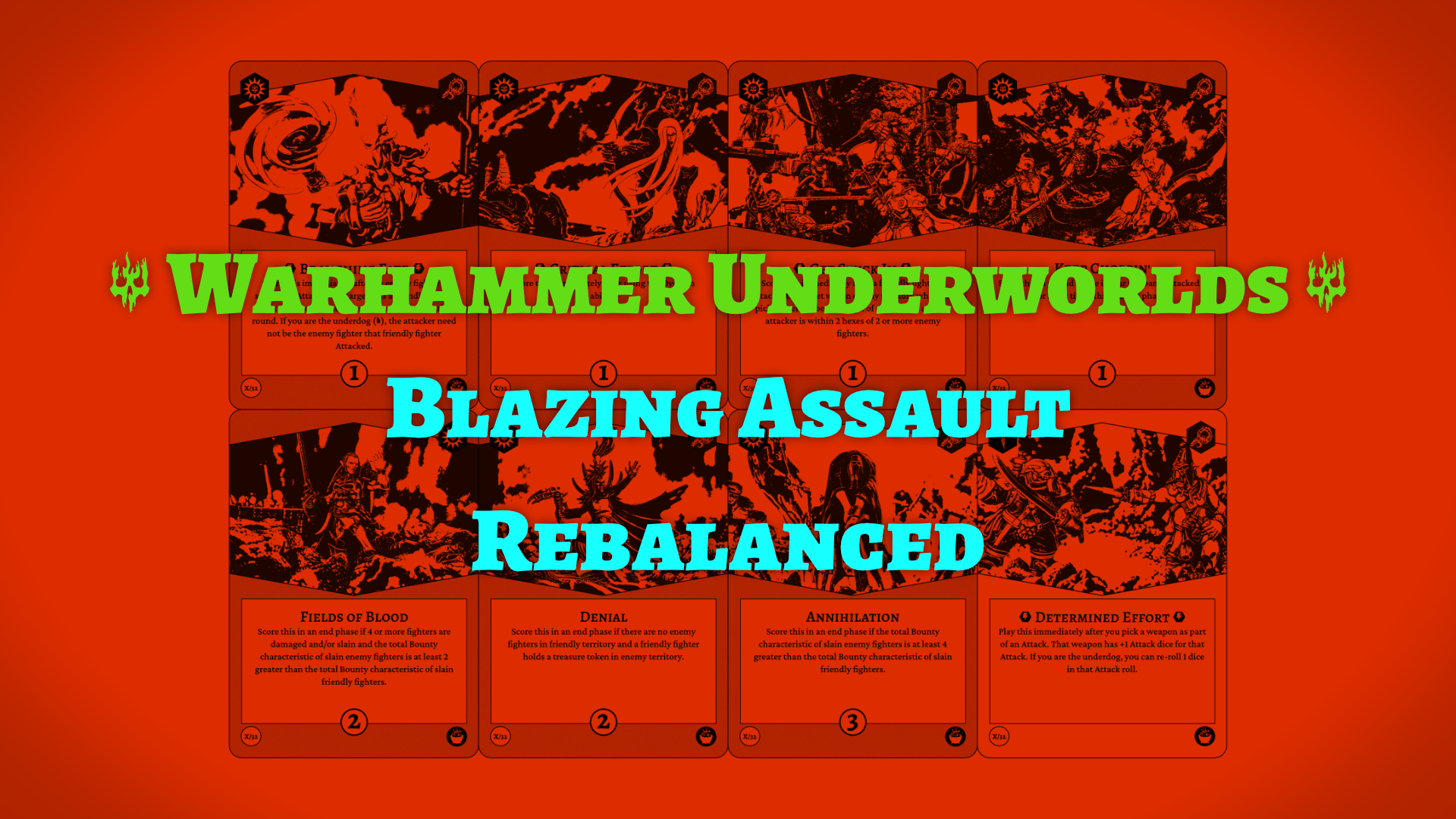
My release of the Homebrew Deck Template for Warhammer Underworlds makes it easy to create new sets of cards for the game. And rather than waiting for other people to do the work, I want to start with a small series of homebrew releases: re-balancing the existing Rivals Decks. And today, we’ll start with a deck that is synonymous with Underworlds’ second edition: Blazing Assault. According to my own stats, it is the most played deck.
In general, for the Embergard Core Set decks (Blazing Assault, Daring Delvers, Countdown to Cataclysm, and Emberstone Sentinels) my goal is to slightly nerf them and make them more interesting from a mechanics standpoint as well as increasing card diversity, meaning that less picked cards should become more attractive.
As with all of my upcoming designs, I want to avoid printing “auto-scores” that just reward basic play patterns with Glory.
You can download the print files for the re-balance right away!
Design Considerations
Blazing Assault is the baseline deck of the system. It’s about rolling dice and smashing stuff. It mostly has generic effects and objectives, with little identity other than being “aggro”. The strength of the deck lies in its good Power Cards and Surge Objectives, while it’s severely lacking in the End Phase Objectives.
Therefore, I attempted to give it a little more identity and complexity, as well as improve the glory curve of the End Phase Objectives. As Blazing Assault contains the majority of “evergreen” upgrades (“Great X”), it also showcases my new vision for these: big reward, but also clear limitations and downsides. These additions are supposed to stop extreme cases of upgrade stacking, i.e. the creation of an almost invincible “voltron” killing machine.
Objectives
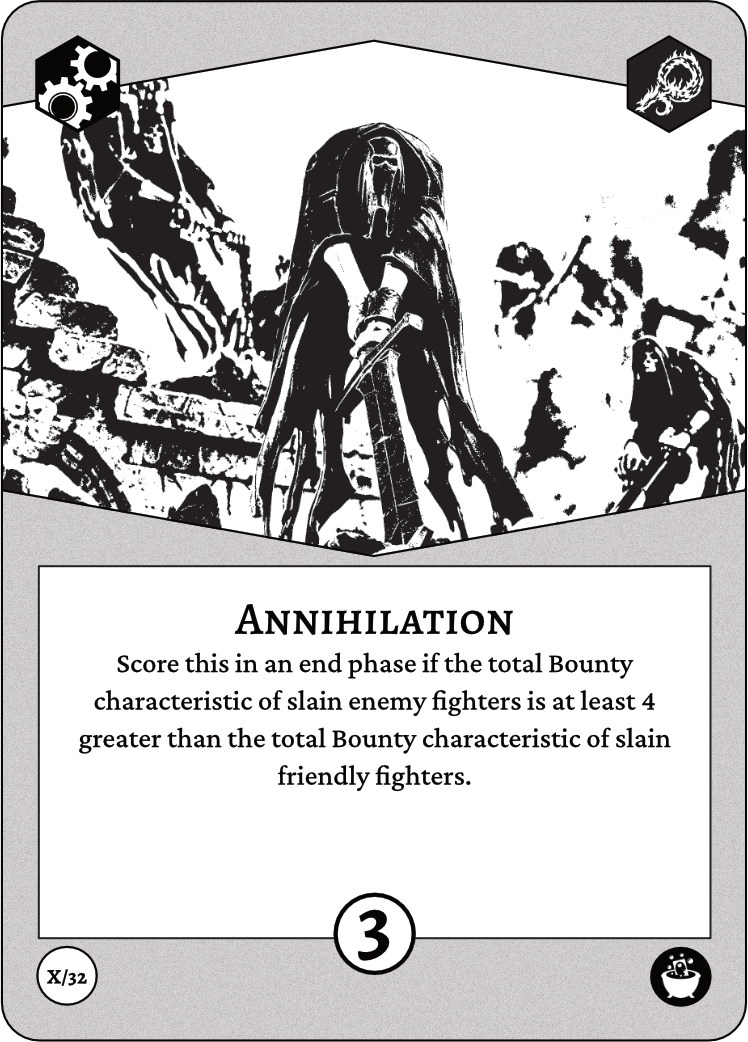
Annihilation
- Previously, scoring this card in most cases meant that you would have won anyway. The 5 Glory reward also meant that the reward of all other objectives had to be 1
- The re-balance tries to find a balance between the sense of annihilation and the objective still being achievable in more games
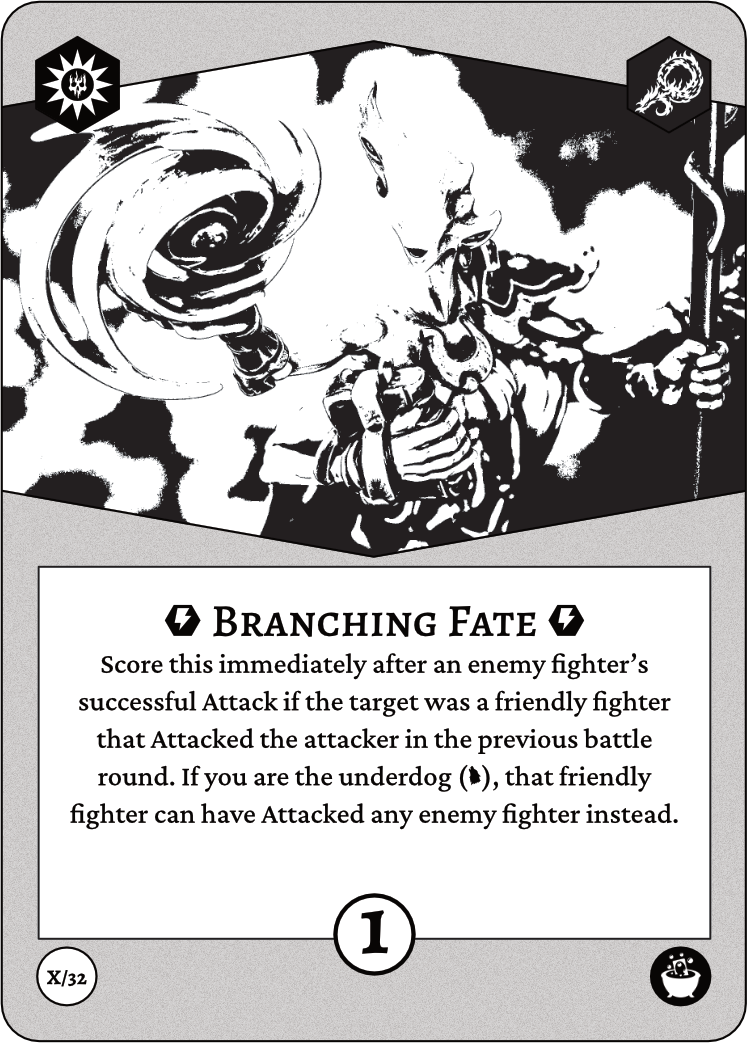
Branching Fate
- The original was largely a slot machine with relatively little player agency and decision-making
- The adapted version plays on the theme of revenge. It’s about taunting your opponent into striking back
- In this instance, I had issues with formulating the rules text while sticking to the space constraints of the actual text field
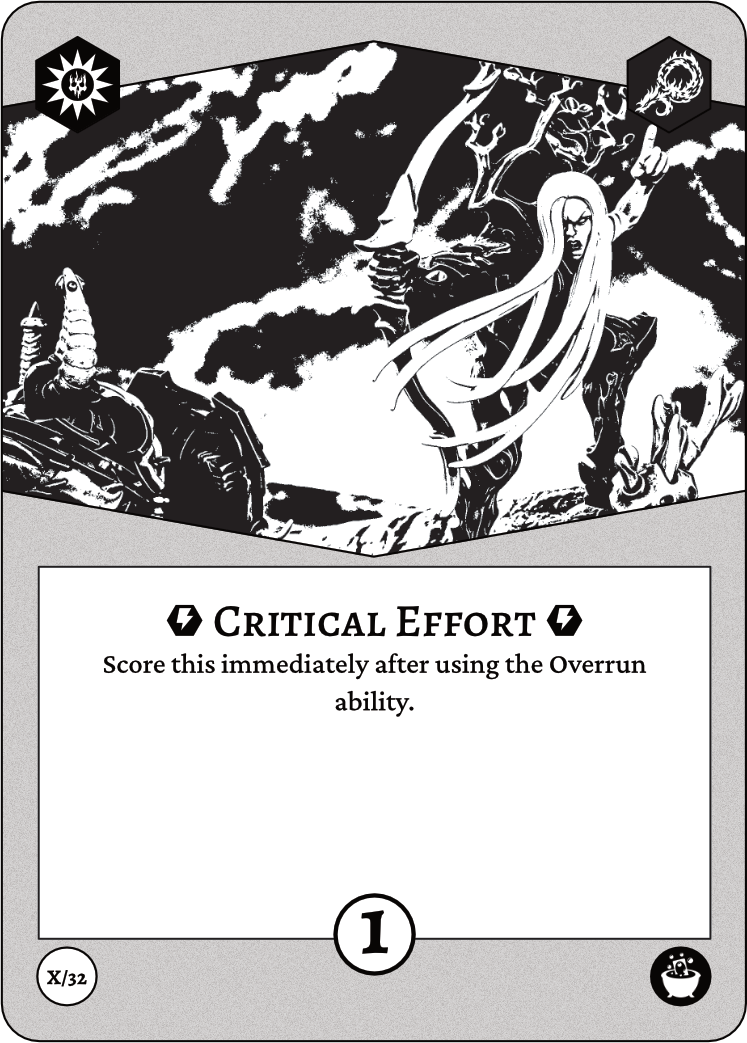
Critical Effort
- Another purely dice-based objective with little strategic thinking attached to it
- In the re-design, the condition is potentially harder to fulfill while opening up design space around the universal Overrun ability and interactions with other effects targeting it
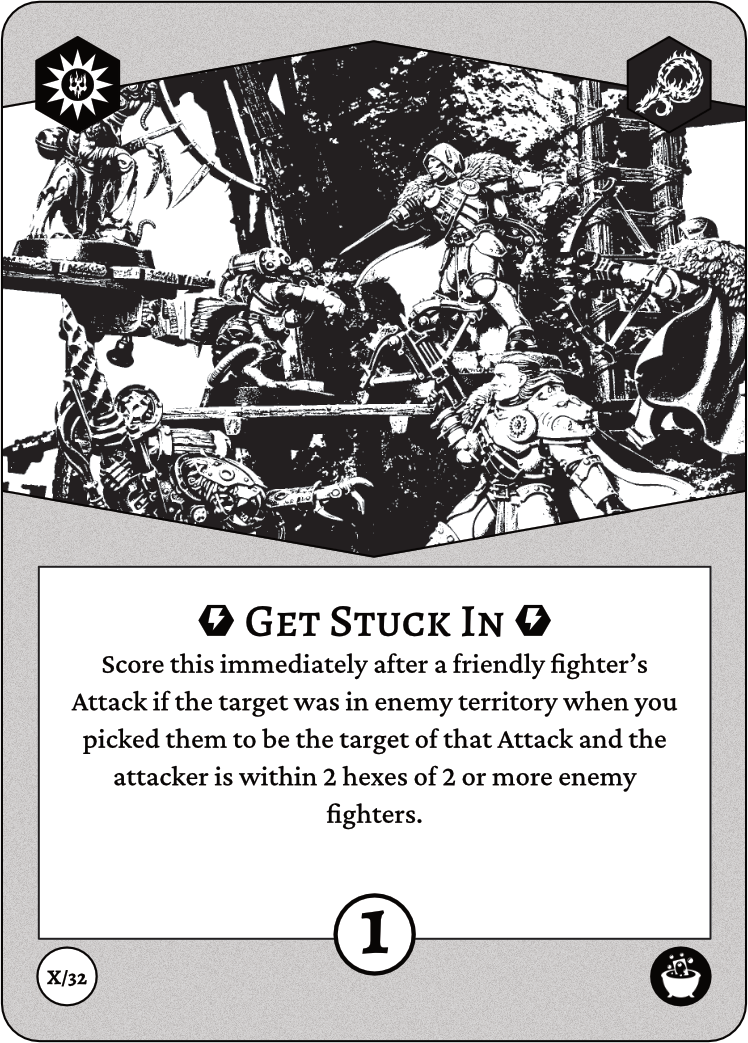
Get Stuck In
- This is the prototype of the “autoscore” objectives I talked about. If you drew it, you scored it
- The redesign at least raises the stakes and necessitates specific positioning
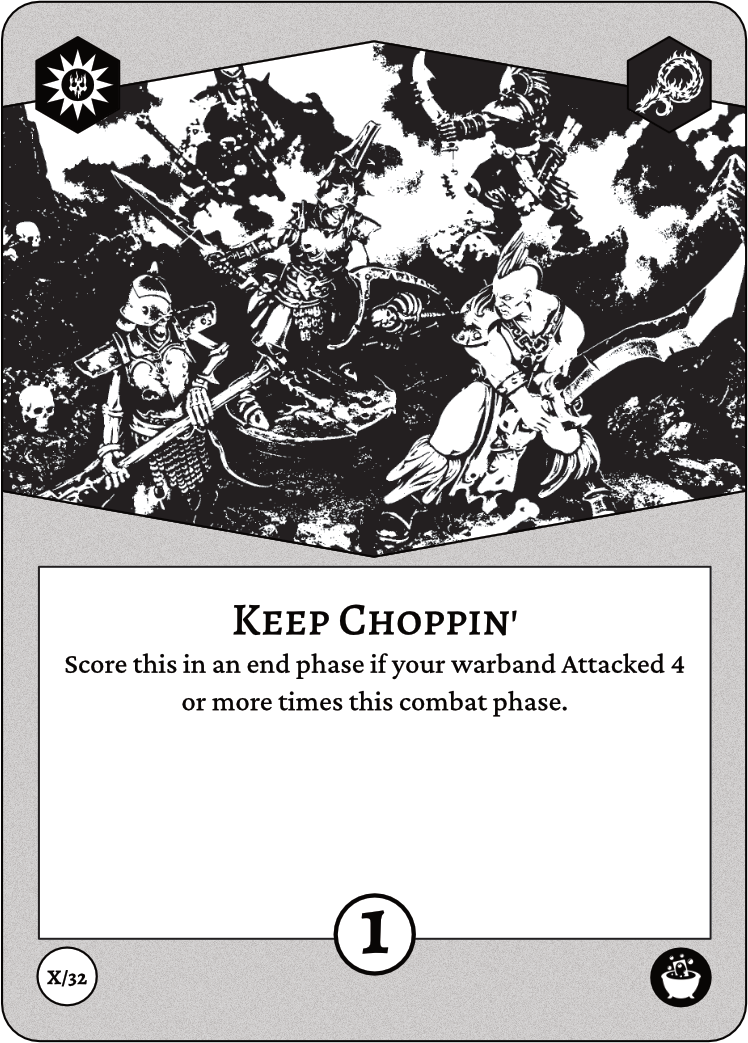
Keep Choppin’
- The original was way too easy to score. If you’re playing Blazing Assault, you’re maximizing attacks anyway
- The redesign raises the number of attacks needed to 4, which means that you don’t have the option of a single Move Action anymore or have to find ways for an attack out of sequence
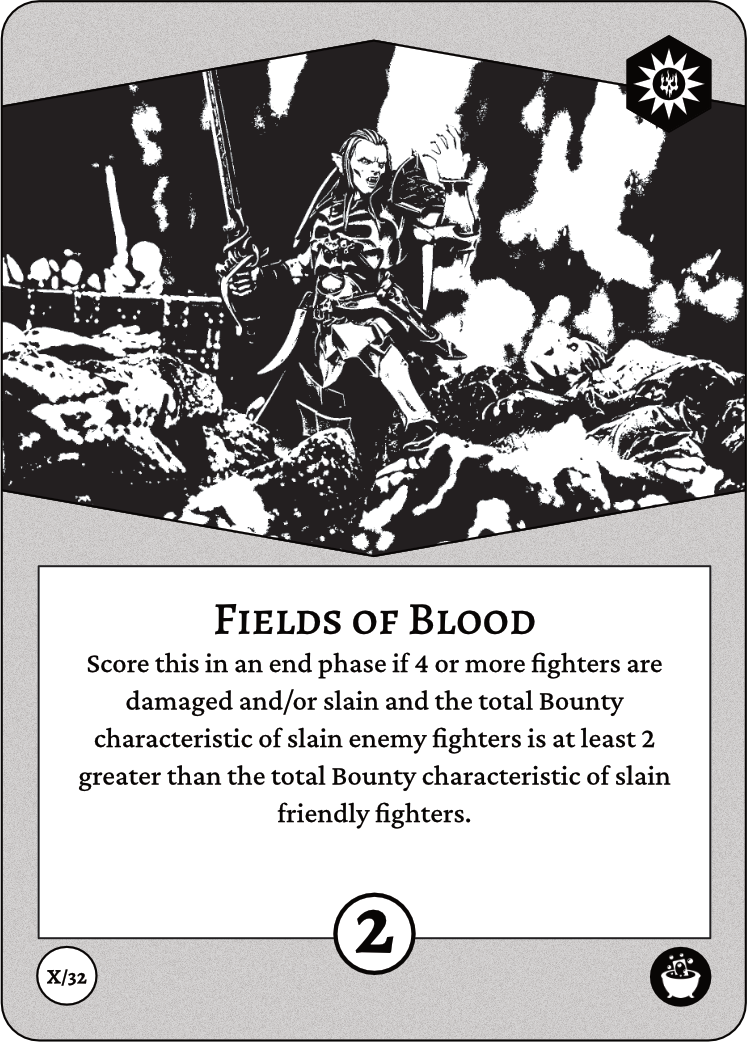
Fields of Blood
- Basically an “autoscore” from the second round forward
- For the re-balance, I increased the Glory awarded to 2 while adding a condition that is basically halfway through to Annihilation
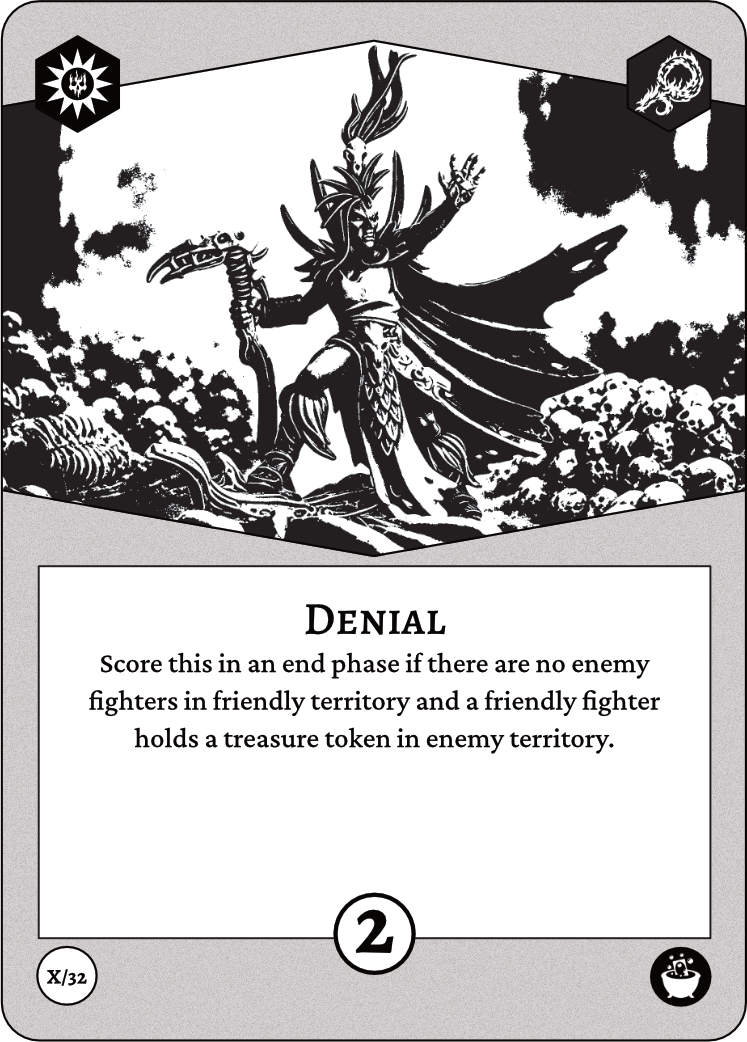
Denial
- Actually one of the harder objectives in the deck. Depending on the matchup, the work needed to achieve this could have been disproportional to the reward
- The reward was increased to 2 in the re-balance while adding another positional requirement. This also means that the deck now cares about Treasure Tokens at least in one instance.
Ploys
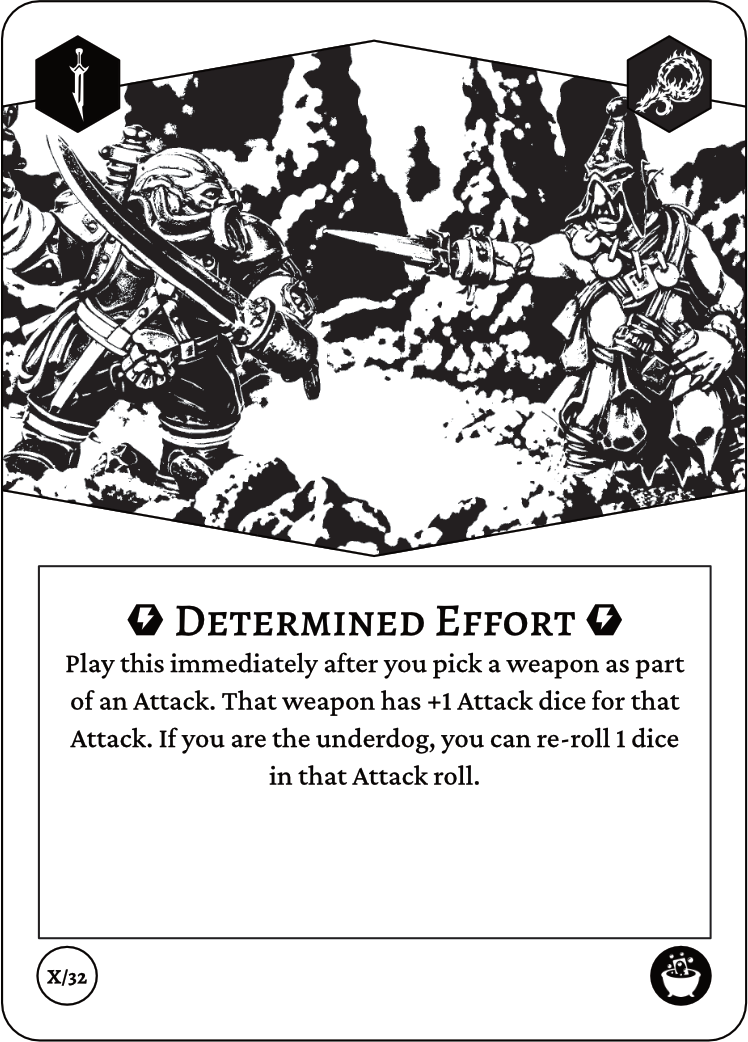
Determined Effort
- The Underdog effect of the original was often easy to get access to and quite extreme
- The rebalance caps the potential to some degree

Healing Potion
- Similar to Determined Effort, the Underdog effect was really strong and could potentially negate the effects of a whole round of activations by your opponent
- In the re-balance, the second effect now only amounts to a defensive aura
Upgrades
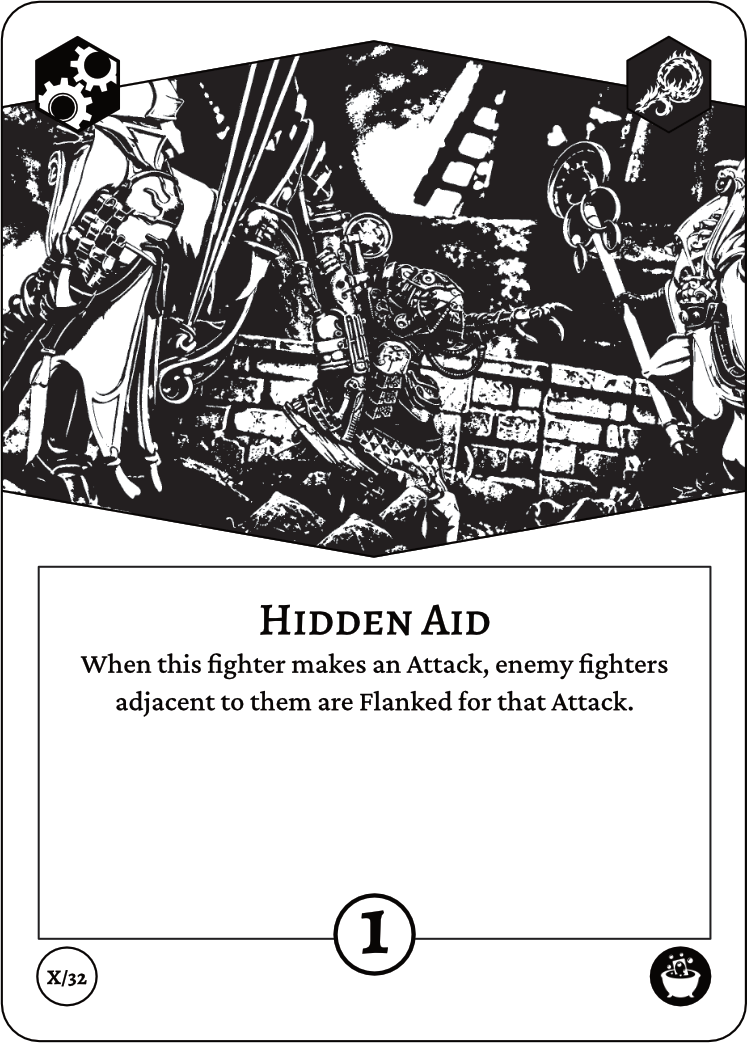
Hidden Aid
- Originally, this upgrade provided both a pretty significant offensive and a defensive buff
- The re-design limits the effect to offense only, adjusting the power level to be in line with the adjusted Upgrades
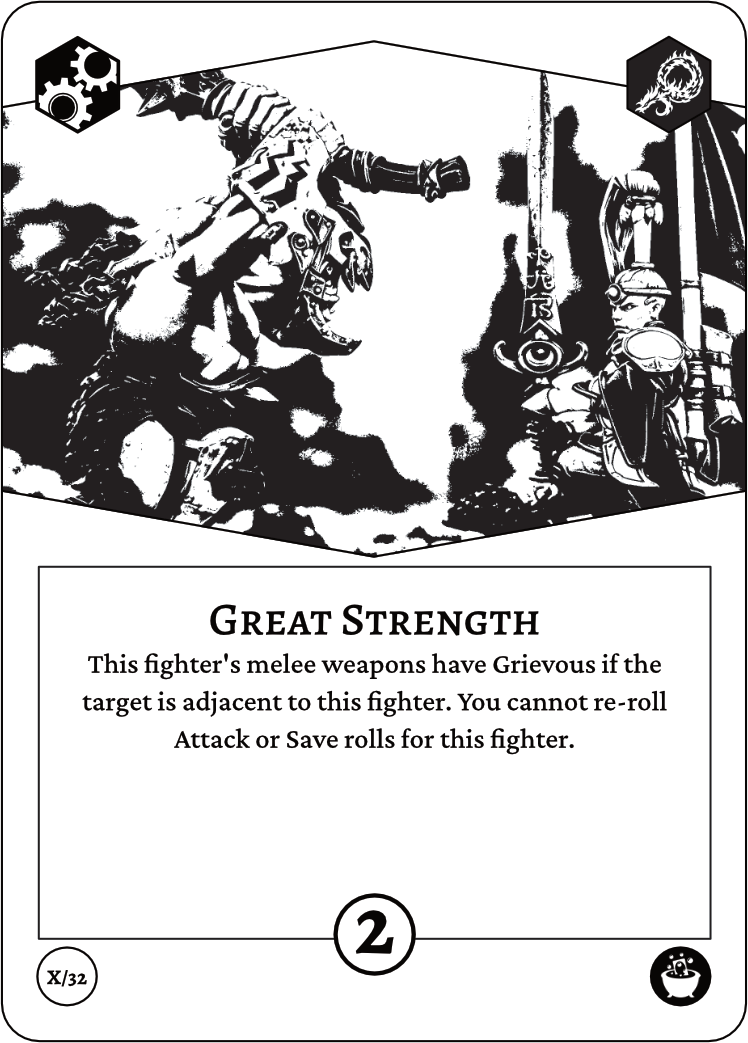
Great Strength
- As you will see, all “Great X” upgrades receive a significant nerf
- If you’re a strong brute, you want your opponent right next to you and don’t care about finesse or accuracy

Great Fortitude
- You can take the hit, so you’re not worried about blocking
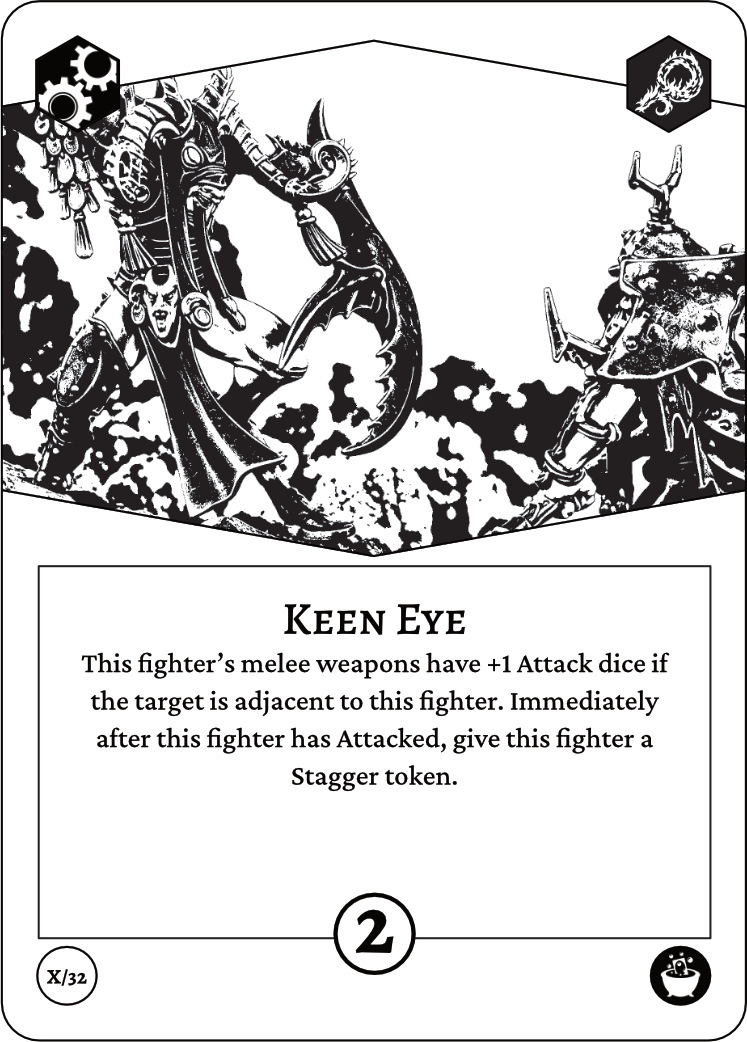
Keen Eye
- Focussing on your opponent’s weak points means that you lose focus elsewhere
Feedback
I’m pretty sure that this particular attempt at changing the balance of Blazing Assault is controversial, and there was no actual playtesting being done yet. Getting feedback is therefore quite important.
I would be thrilled if anyone tries out the new cards, and I’m looking forward to the discussion on Reddit and Discord!
By the way, I already have an Excel sheet with a re-balance of Countdown to Cataclysm all filled out. Do you like the idea of a re-balance? I think Raging Slayers, Realmstone Raiders, and Edge of the Knife could really use one as well. With my Homebrew Template, you can get going right away!